


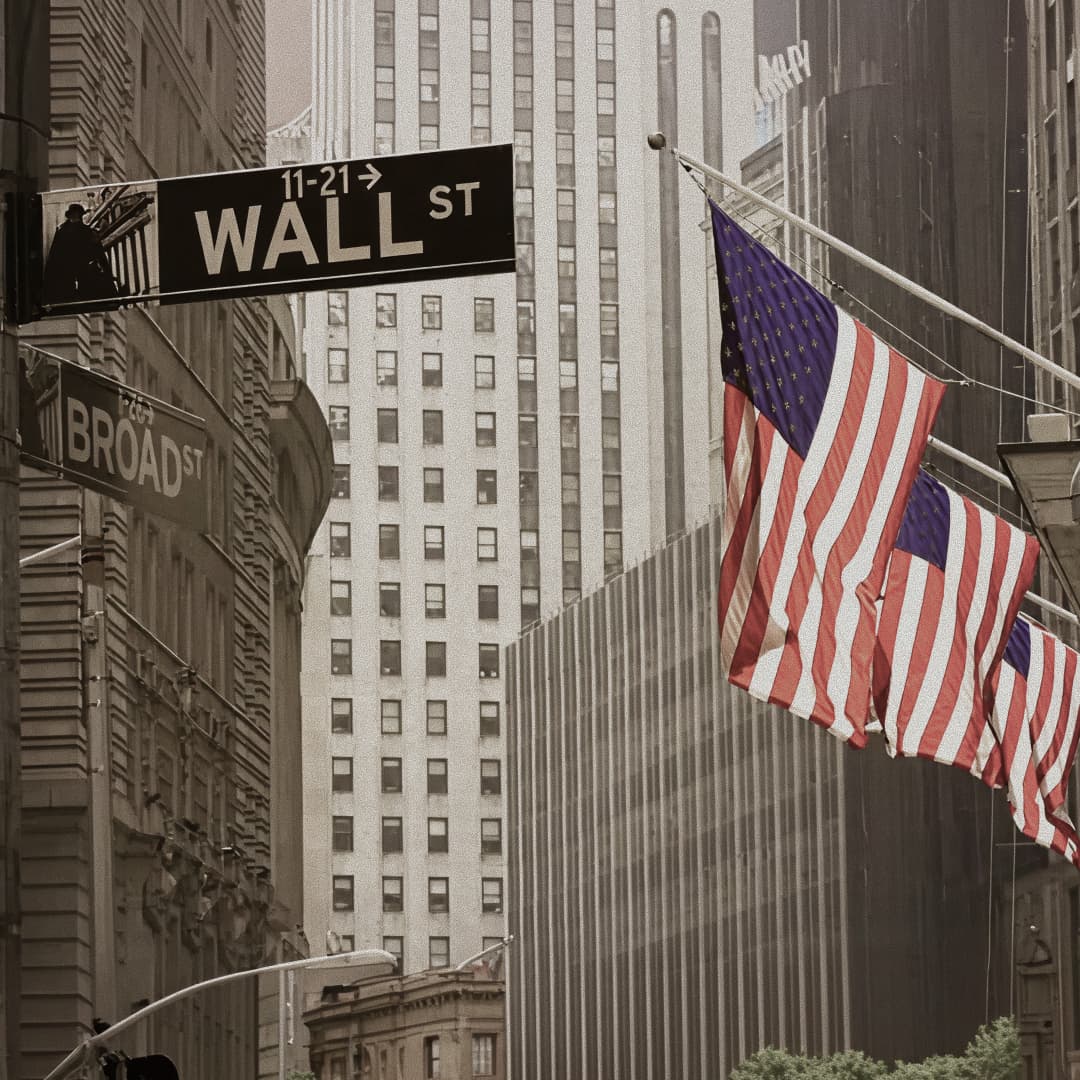
Greed Is Good
What the film still teaches us about scarcity, creation, and the people who build the economy
Most people remember Wall Street (1987) for one line and one villain. Gordon Gekko (Michael Douglas), with his slicked-back hair and expensive watch, tells a room of shareholders that greed is good. Oliver Stone built the film as an indictment of the decade, of leveraged excess, and of a culture that mistook price for worth. Bud Fox (Charlie Sheen) trades his conscience for a seat near Gekko and nearly loses everything.
But Gekko is not altogether wrong, and that is what gives the film its staying power. He is harsh, and so is a market that truly works; the harshness is not a flaw in the machine but the machine doing its job. Watch it again in 2026, though, and the ground has shifted beneath him. Gekko's edge was understanding: he read a company faster than anyone across the table, but he also read people, and he was ruthlessly intuitive. AI deal platforms do not take that judgment away. They do the groundwork beneath it, and far faster, so the entrepreneur with a million dollars and a hundred possible deals no longer needs months to determine which one is the real opportunity. For a Gekko, such a platform would not have replaced his instincts. It would have multiplied them.
1. Gekko's Half-Truth
Strip the menace from the speech and a real claim remains. Self-interest is not an embarrassment to be lectured out of people; it is the engine. Adam Smith put it plainly more than two centuries ago: the baker does not bake to feed the town but to feed himself, and the town is fed regardless. What Gekko says about appetite, that it cuts through, clarifies, and drives, the film cannot truly refute. It can only show the cost.
2. The Market Is an Information Machine
Gekko prizes information above everything, and there he is most right of all. This is the deepest idea in modern economics. Friedrich Hayek argued that no central authority could ever know what a market knows because that knowledge is scattered across millions of people who never meet, and prices are how that knowledge is gathered and transmitted. The Chicago School of Economics, and Milton Friedman above all, spent decades advancing the same point: the price system is a vast, decentralized computer that turns private information into public coordination. Gekko's edge was that he read the machine faster than the people around him.
3. Scarcity, and Why the Market is Harsh
To see why that harshness is necessary, start where Thomas Sowell starts. Economics, he writes, is the study of the use of scarce resources that have alternative uses. Every word carries weight. Resources are limited, and almost anything devoted to one purpose could have served another. Capital trapped in a company that destroys value is capital not building something that would have created it. A market that refused to be harsh, that let every failing enterprise keep its grip on money, land, and talent out of mercy, would slowly starve the things worth feeding. The cruelty people resent in capitalism is, at bottom, the pressure of scarcity made visible.
4. Creative Destruction, and Gekko's Actual Job
This is what creative destruction really means, and it is usually misread. Joseph Schumpeter used the term to describe how capitalism advances: not by accumulation but by the relentless replacement of the old with the better. The process has two halves. Someone builds the new, and someone breaks apart the old so its resources come loose. Gekko does the second job. His hostile takeover of Blue Star Airlines, the M&A play that drives the film, is that work in its harshest form: prying scarce resources out of an enterprise that is not using them well so they can flow to one that will.
Stone gives the other side a voice in Bud's father, Carl (Martin Sheen), a union man who built real things and wants his son to do the same, and our sympathies go with him. But an economy needs both men. The builder and the breaker are two hands of one process.
5. Money Never Sleeps, and the Cost of Understanding
Gekko's other boast is that money never sleeps. Stone means it as a symptom of sickness, and sometimes it is, but that restlessness is also how capital keeps moving toward better uses. The real brake was never desire. It was understanding.
Before anyone can decide whether to buy a company, break it up, or build it, somebody has to comprehend it: the contracts, the liabilities, and the one quiet clause that changes the math. That work is slow, expensive, and easy to get wrong, and its cost has always sat like a tax on every good decision. That is precisely why Gekko's head start on information was worth so much.
6. The Real Less of Wall Street
So the film's lasting lesson is not that greed is bad. It is that a free market is a harsh and magnificent machine for moving scarce resources toward their best use, and that the harshness and the magnificence are one thing seen from two sides.
Henry Hazlitt put the discipline in a sentence: the good economist judges every act by its effects on everyone over the long run, not by the gain in front of him. The architects of the American order understood the same truth about human nature. They did not try to abolish ambition. In Federalist No. 51, Madison wrote that ambition must be made to counteract ambition, and they built a structure in which it would. The market is that insight turned loose on enterprise.
Its creators are entrepreneurs, the civilian equivalent of soldiers: founders, investors, and builders who go first into unknown ground, staking their capital and their years on the chance that something better emerges on the other side. Almost everything we use was once one of them taking a risk that did not have to work.
And this is the shift the opening pointed to. The slow, costly work of understanding a deal, the very thing that once made information hoarders like Gekko so powerful, is exactly what artificial intelligence is built to compress. When a founder or an investor can understand a transaction in hours instead of months, the decision to back a venture or pursue an acquisition can be made faster and on better information. Edges that once belonged to the few become available to the many. More good decisions get made. More capital reaches the builders. A society that lowers the cost of understanding raises the rate at which it creates, and creation is the engine of progress.